What has Titanic got to do with Liverpool?
Why did American records carried across the Atlantic help shape the sound of Merseybeat?
How did a computer installed in a Liverpool bank become part of the story of modern British banking?
And how many famous people, ships, inventions, wars, buildings and events have a Liverpool connection most of us have never noticed?
That is the question behind this series:
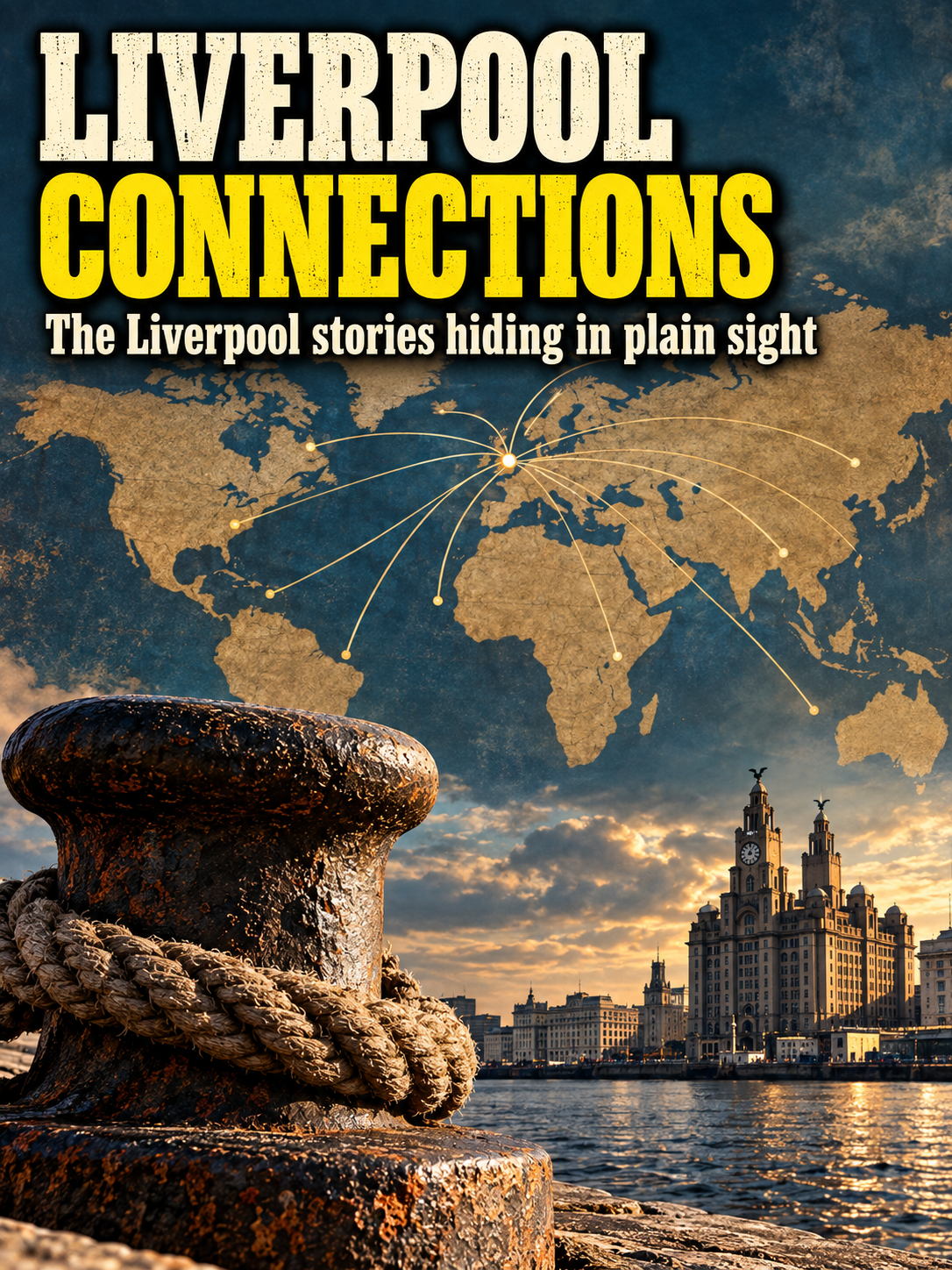
WHAT’S THE LIVERPOOL CONNECTION?
Sometimes the answer is obvious.
Sometimes it is hidden in an address, a ship’s registry, a family story, an old photograph or a name carved into stone.
And sometimes the connection sounds so unlikely that it deserves investigating properly.
That is what Liverpool Connections is for.
LIVERPOOL HAS ALWAYS LOOKED OUTWARDS
Liverpool’s history does not stop at the city boundary.
Its position on the Mersey helped turn it from a relatively small town into an international port linked with Europe, Africa, the Americas, Asia and beyond. The opening of the Old Dock in 1715 was a decisive step in that transformation, allowing ships to load and unload regardless of the tide and helping accelerate Liverpool’s overseas trade. [1]
Ships carried cargo.
People arrived and departed.
Ideas travelled.
Cultures mixed.
Businesses expanded.
Music crossed oceans.
Those connections brought opportunity and prosperity, but they also include some of the darkest parts of Liverpool’s past. Liverpool became a major slaving port, and its ships and merchants dominated the British transatlantic slave trade during the second half of the eighteenth century. [2]
This series will not pick only the comfortable stories.
It will follow the evidence wherever it leads.

TITANIC — ONE WORD, ONE CONNECTION
Take RMS Titanic.
She was built in Belfast.
She sailed on her maiden voyage from Southampton.
Yet beneath her name on the stern appeared another word:
LIVERPOOL
Why?
Because Liverpool was Titanic’s registered home port, while the White Star Line had its headquarters at Albion House in the city. National Museums Liverpool’s Titanic exhibition places the ship firmly in this Liverpool “home port” context. [3]
Titanic never had to sail from Liverpool for Liverpool to matter to her story.
That single word opens a much bigger history.
And that is exactly what this series is about.
A familiar subject.
An overlooked detail.
A Liverpool connection hiding in plain sight.

CONNECTIONS THAT CROSSED THE ATLANTIC
Sometimes Liverpool received the influence first.
Merseyside seafarers working transatlantic routes brought American records back from the United States during the post-war years.
Rhythm and blues, rock ’n’ roll and other American sounds reached Liverpool musicians and audiences. The seafarers remembered as the “Cunard Yanks” are commonly credited with bringing Black American R&B records back from the United States and feeding Liverpool’s developing music scene, although that was only one of several routes through which those influences reached local musicians. [4]
Those influences fed into a city already developing its own musical identity.
Then Liverpool sent something back.
Merseybeat travelled across the Atlantic.
The Beatles became an international phenomenon.
Liverpool went from importing musical influence to exporting a sound recognised around the world.
One connection had travelled in both directions.
THE WORLD CAME TO LIVERPOOL TOO
Liverpool’s international story is not only about ships leaving the Mersey.
People arrived here and stayed.
Irish migration transformed the city.
Chinese seafarers and families established a community whose roots stretch back generations.
Black communities became part of Liverpool’s maritime and social history.
Jewish families, Europeans and people from the Middle East, Africa, Asia and many other parts of the world built lives here.
Liverpool City Council describes the city as home to Europe’s oldest Chinese community, Britain’s oldest Black community and one of Britain’s oldest Jewish communities, shaped by successive waves of migration through the port. [5]
Those connections became part of Liverpool itself.
They can be seen in neighbourhoods, businesses, places of worship, food, language, politics, music and family histories.
Sometimes the Liverpool connection is thousands of miles away.
Sometimes it is on the next street.

EXPLORE LIVERPOOL CONNECTIONS
This page is the gateway to the series.
As new investigations are published, they will be added here so the connections can be followed in one place.
SHIPS & THE SEA
Famous vessels, shipping companies, maritime disasters and stories carried across the oceans.
PEOPLE & COMMUNITIES
People who left Liverpool, people who arrived here and families whose stories connect the city with the wider world.
MUSIC & CULTURE
Records, musicians, writers, artists, films and cultural influences that travelled into Liverpool — and back out again.
INVENTION & INDUSTRY
Businesses, machines, engineering, technology and ideas with a Liverpool chapter hidden inside a much bigger story.
WAR & WORLD EVENTS
International conflicts, political decisions and major events whose effects reached the city and its people.
BUILDINGS & OBJECTS
Sometimes the evidence is still standing.
A plaque.
A carving.
A headquarters building.
A memorial.
An object in a museum.
A detail thousands of people pass without noticing.
Start following the connections
Liverpool Connections already in the archive
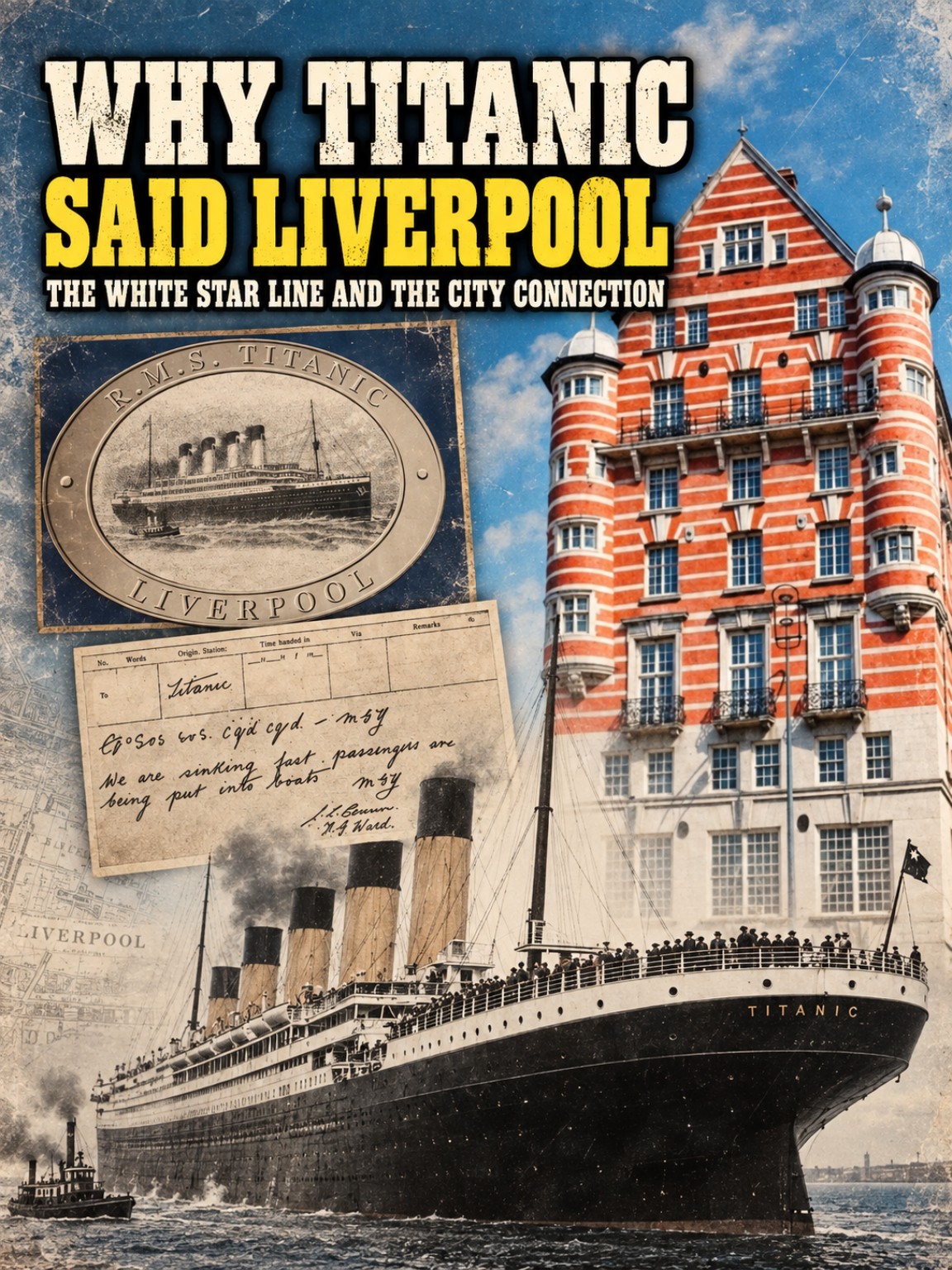 Ships & the seaWhy Titanic Said LiverpoolArticle No. 11 · Maritime & Docks · 7 min read
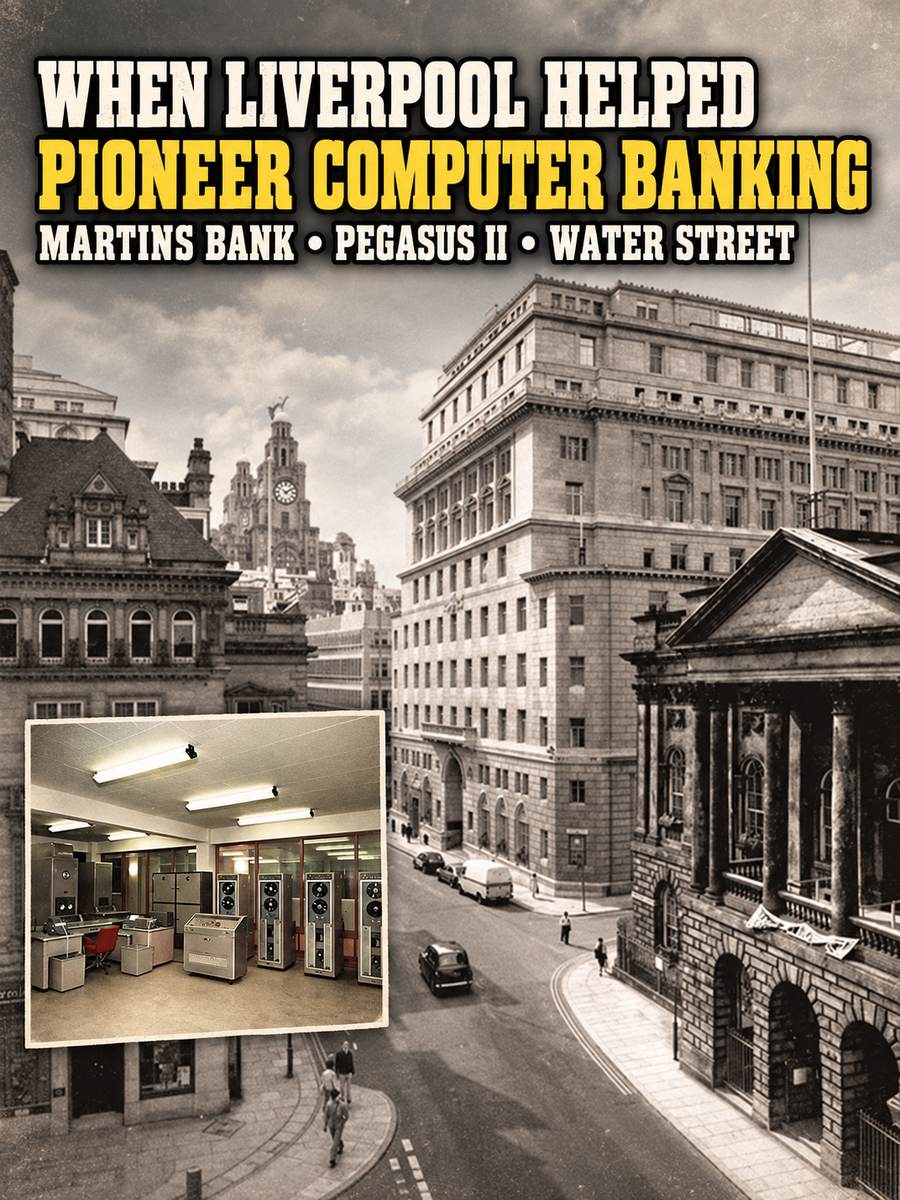 Invention & industryWhen Liverpool Helped Pioneer Computer BankingArticle No. 15 · Business & Industry · 9 min read
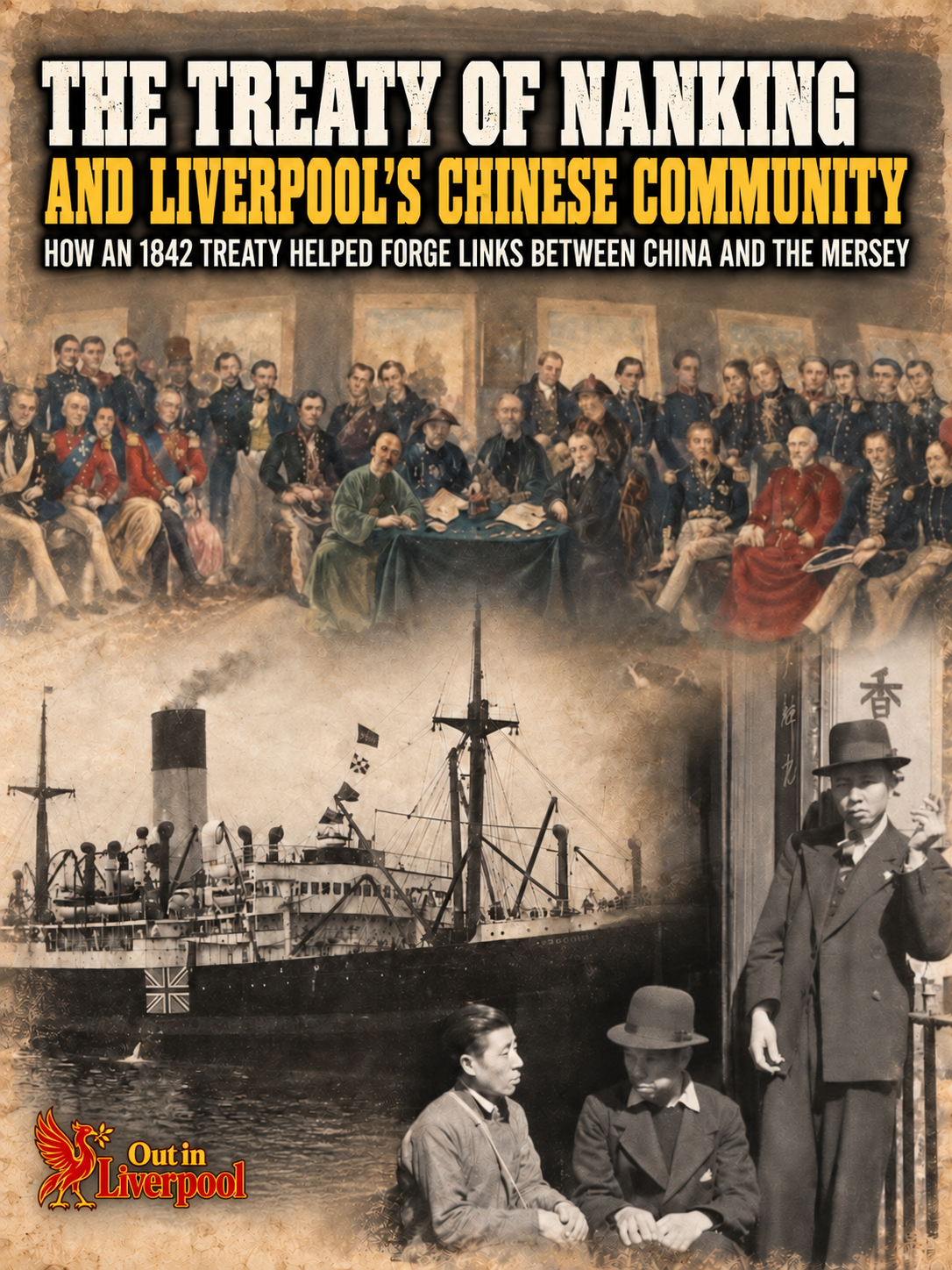 People & communitiesThe Treaty of Nanking and Liverpool’s Chinese CommunityArticle No. 9 · People & Communities · 9 min read
FOLLOW THE CONNECTION
Liverpool history is not a collection of isolated stories.
It is a web of connections.
Ships linked ports.
Migration linked families.
Trade linked continents.
Music linked cultures.
Businesses linked cities.
Wars and political decisions made elsewhere changed lives here.
Liverpool, in turn, influenced places far beyond the Mersey.
Some of those connections are famous.
Some are uncomfortable.
Some have been forgotten.
And some sound almost unbelievable until you start following the evidence.
That is what this series will do.
One story at a time.
One clue at a time.
One Liverpool connection at a time.
Citations
Sources & further reading
- [1] National Museums Liverpool — The Old Dock: the 1715 dock and its role in Liverpool’s expansion as an international trading port. National Museums Liverpool.
- [2] International Slavery Museum: Liverpool’s major role in the transatlantic slave trade and the wealth it generated in the city. National Museums Liverpool.
- [3] National Museums Liverpool — Titanic and Liverpool: resources placing Titanic in her Liverpool home-port and White Star Line context. Titanic resource pack.
- [4] The Beatles Story — Cunard Yanks and Black music: the role of Merseyside merchant seamen and American R&B records in Liverpool’s post-war music scene, alongside other sources of Black musical influence. The Beatles Story.
- [5] Liverpool City Council — Liverpool’s communities: the city’s long history of multiculturalism and successive migration through the port. Liverpool City Council.
- Supporting image: Liverpool landing stage, c.1900, American Stereoscopic Company. Library of Congress.
- Supporting image: Albion House, former White Star Line headquarters. Wikimedia Commons.
- Supporting image: Chinese Merchant Seamen Memorial, Pier Head. Wikimedia Commons.
Continue the conversation
Share this Liverpool story
Follow Out in Liverpool or bring your own memories and knowledge to the Community Group.