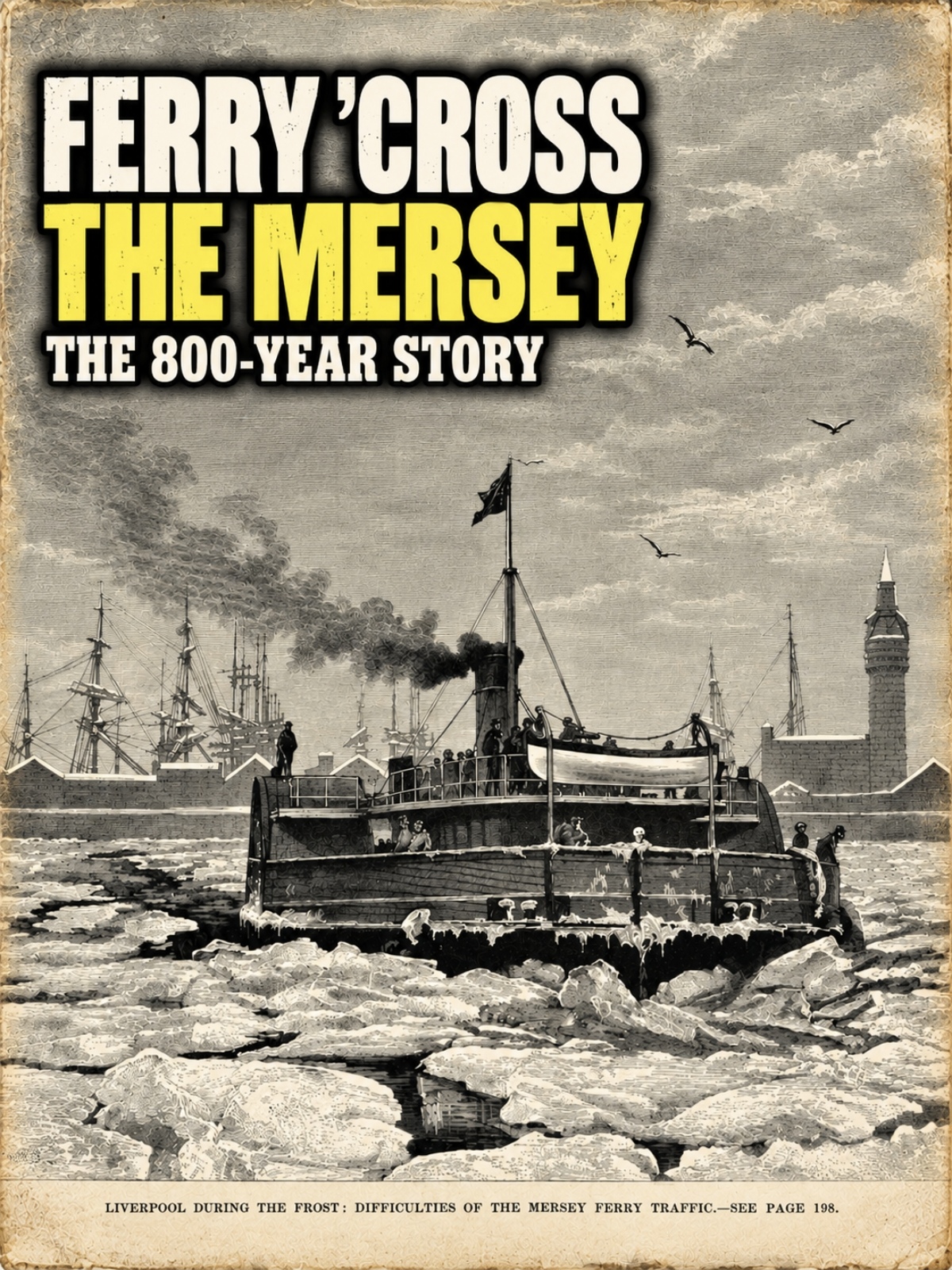
The Mersey ferry tradition reaches back more than eight centuries. Long before the Liver Building, the great docks or Victorian Birkenhead, people were crossing this river between the Lancashire and Wirral shores.
Over the centuries the boats carried travellers, horses, market goods, commuters, dock workers, soldiers, shoppers, musicians and tourists. Two ferries went to war. Another became a floating dance hall. Gerry Marsden turned the crossing into a song known around the world.
And in 2026 the story gained a new vessel: the £26 million Royal Daffodil, the first completely new Mersey Ferry in more than sixty years.
DOES THE STORY REALLY BEGIN IN 1150?
The familiar starting point is Birkenhead Priory, founded on a wooded headland between Wallasey Pool and Tranmere Pool in the twelfth century.
1150 is the traditional starting date used in the modern Mersey Ferries story. It is a useful landmark, but it should not be mistaken for the date of a surviving document recording the first ferry crossing. Historic and architectural evidence places the foundation of the Benedictine priory in the twelfth century, while the documentary trail for its ferry becomes much firmer later.
The monks offered hospitality to travellers. Once Liverpool received its borough charter in 1207 and developed as a market town, movement across the Mersey became increasingly important.
In 1318 the Prior secured permission connected with lodging and feeding travellers. Then, in 1330, Edward III granted the Priory the right to operate the ferry and levy reasonable tolls for carrying people, horses and goods.
That charter gives us a strong documentary foundation beneath the much older ferry tradition.
THE MONKS, THE MARKET AND THE RIVER
The medieval ferry was not a tourist attraction. It was infrastructure.
Travellers crossing from the Wirral shore needed somewhere to wait when tides, weather or darkness made the river dangerous. The Priory provided shelter and food, while the ferry linked the monastic estate with the growing settlement opposite.
The Mersey could be a barrier, but the ferry turned it into a route.
That simple function would remain remarkably constant even as almost everything around it changed.
AFTER THE MONKS
Birkenhead Priory was dissolved in 1536 during Henry VIII's suppression of the monasteries. The religious community disappeared, but the need to cross the Mersey did not.
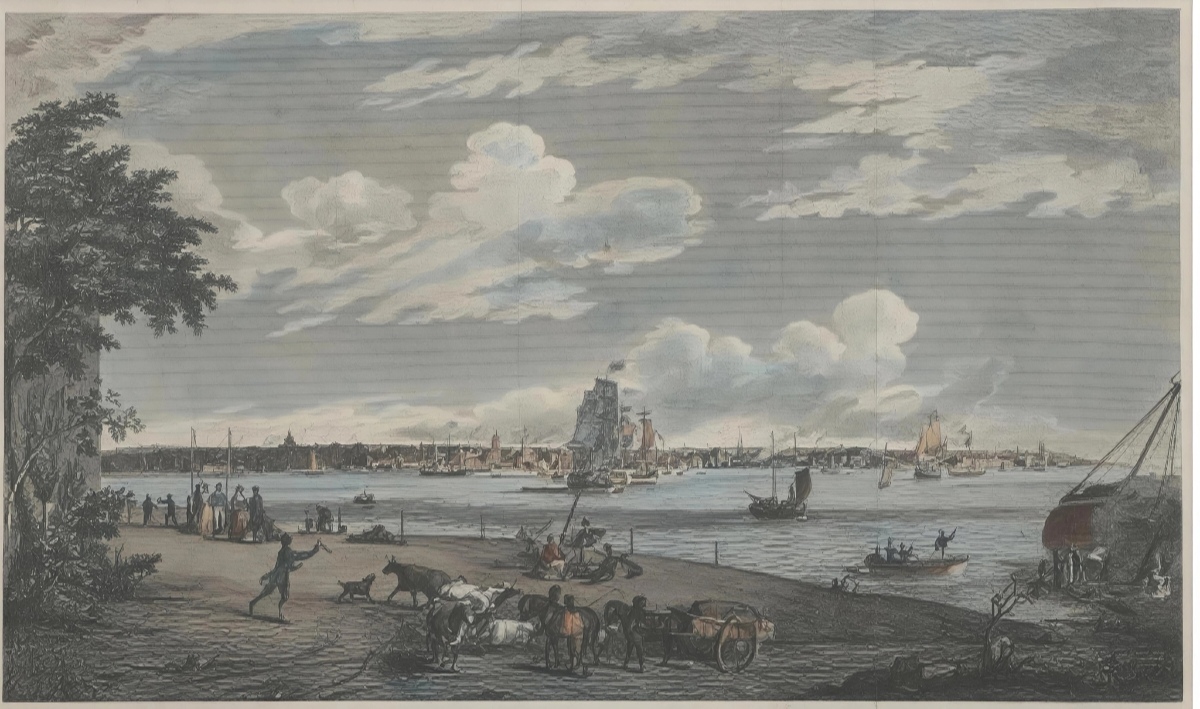
Ferry rights passed through private hands and a wider network of crossings developed along the Wirral shore. Over time passengers could cross from places including Woodside, Seacombe, Egremont, New Brighton, Rock Ferry, New Ferry, Tranmere and Eastham.
These routes rose and fell with population, industry and transport connections. Some became major commuter services. Others vanished almost completely from the modern landscape.
What survived was the idea of the river as something to be crossed routinely rather than an obstacle defining two separate worlds.
STEAM CHANGES THE CROSSING
For centuries, ferry crossings depended on sail, oar, wind, tide and human effort. The nineteenth century changed that.
Mersey Ferries traditionally dates its first steam ferry, Etna, to 1815. Steam did not replace every older craft overnight, and different Wirral terminals adopted powered vessels at different times. But by the 1820s and 1830s steam was transforming cross-river travel.
The importance of steam was not merely speed. It offered something increasingly valuable to a growing urban population: greater regularity.
That mattered because Liverpool was expanding into one of the world's great ports while Birkenhead and Wallasey were beginning extraordinary nineteenth-century growth.
Reliable ferries helped make it practical to live on one bank and work, trade or shop on the other.
LIVERPOOL BUILDS A LANDING STAGE
The transformation was not only happening aboard the boats.
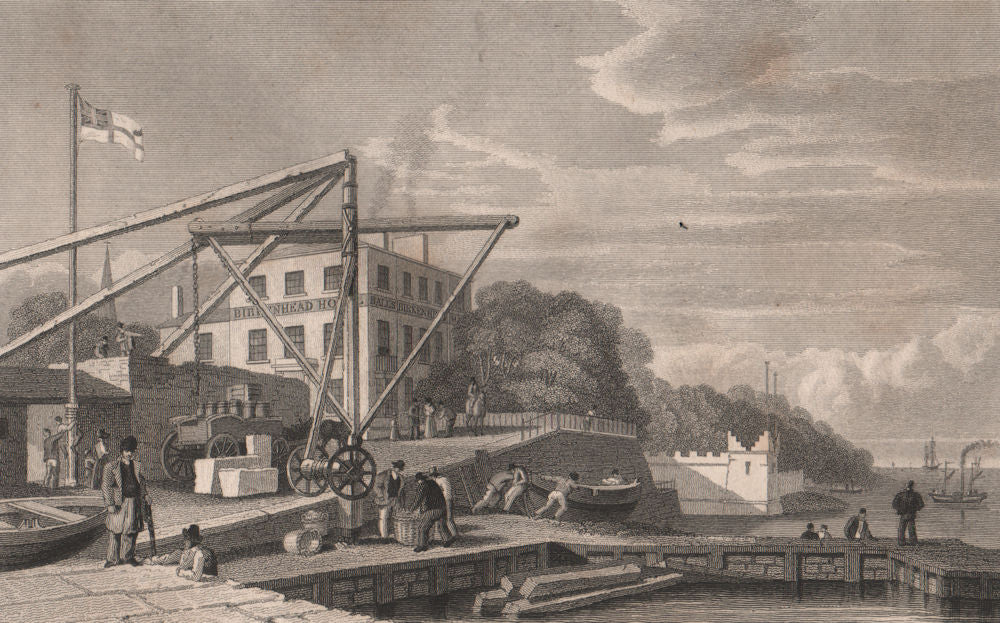
Liverpool's enormous tidal range made boarding difficult. Before floating stages, ferries used stone steps and slips around the waterfront, and passengers could face awkward changes in level as the tide rose and fell.
In 1847, Liverpool brought William Cubitt's new George's Landing Stage into use. About 500 feet long and supported on floating pontoons, it rose and fell with the tide and was linked to the shore by bridges.
The principle was brilliantly simple: instead of forcing passengers and vessels to adapt constantly to the Mersey, the landing stage moved with the river.
George's Landing Stage became the Liverpool end of a transport system carrying immense numbers of passengers. Later landing stages at the Pier Head expanded and changed repeatedly, but the floating-stage solution became one of the defining features of Liverpool's waterfront.
FROM PRIVATE FERRIES TO PUBLIC TRANSPORT
By the middle of the nineteenth century the ferries had become too important to be treated simply as a collection of private ventures.
Municipal control grew on the Wirral side. The Woodside ferry franchise passed to the Birkenhead Improvement Commissioners in 1842, while Wallasey later took control of services including Seacombe.
Ferry terminals became transport interchanges connected with roads, trams, buses and railways. For thousands of people, crossing the Mersey became part of an ordinary working day.
Then came a formidable rival. The Mersey Railway Tunnel opened in 1886, allowing passengers to travel beneath the river rather than across it.
The ferry survived because it still served routes, passengers and purposes the railway did not — and because the open river crossing had become part of everyday Merseyside life.
TWO FERRIES GO TO WAR
The most extraordinary chapter began during the First World War.
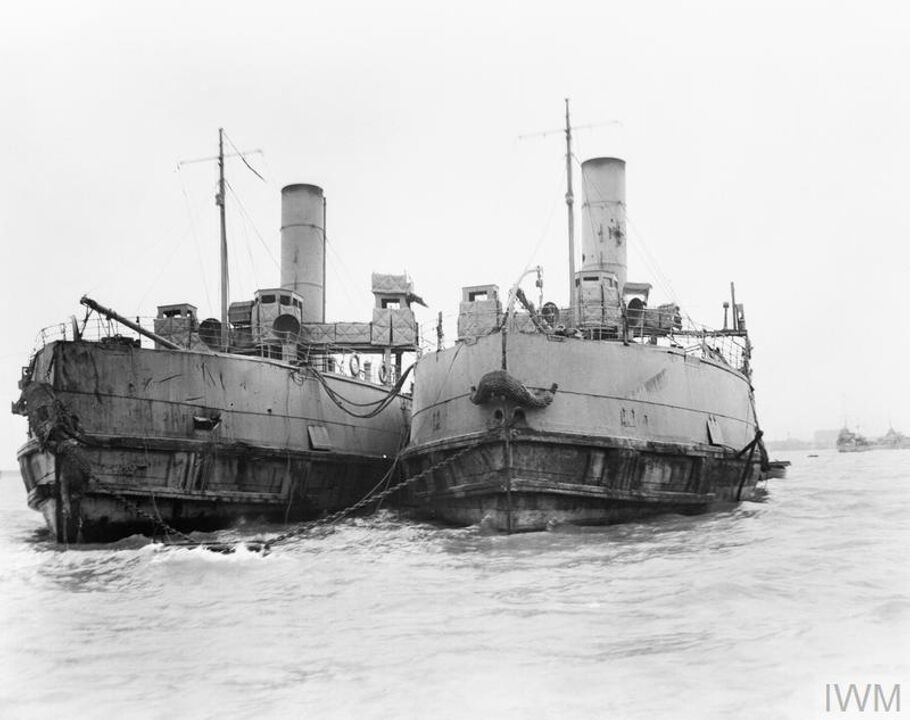
Two Wallasey ferries built in 1906, Iris and Daffodil, were requisitioned for the Royal Navy and selected for the raid on the German-held Belgian port of Zeebrugge.
The attack took place on the night of 22–23 April 1918. The plan included an assault on the heavily defended Zeebrugge Mole while blockships attempted to obstruct the canal entrance used by German naval forces.
Daffodil used her engines to push the cruiser HMS Vindictive against the Mole so assault forces could get ashore. Iris II also came under intense fire while carrying men for the attack.
The raid was costly and its longer-term strategic effect has been debated. The courage and exposure of the crews, however, are not in doubt.
Two vessels built to carry ordinary Mersey passengers had sailed directly into a defended enemy harbour.
WHY THE FERRIES BECAME "ROYAL"
The two vessels returned to the Mersey on 17 May 1918.
By command of King George V, they were afterwards known as Royal Iris and Royal Daffodil.
That is why the word Royal in the Mersey Ferry tradition is not simply decorative branding. It reaches directly back to Zeebrugge.
The names passed to later generations of ferries, which is why the newest vessel on the river in 2026 once again carries the name Royal Daffodil.
WHEN THE FERRY BECAME A STAGE
By the twentieth century the ferries were more than commuter boats. They became part of Liverpool's leisure and entertainment culture.
The Royal Iris of 1951 became famous for its catering and entertainment facilities — remembered by generations as the "fish and chip boat" — and for the Riverboat Shuffles that turned a working ferry into a floating music venue.
The Beatles played four documented Riverboat Shuffle dates aboard Royal Iris: 25 August 1961, 6 July 1962, 10 August 1962 and 28 September 1962.
By the final one, with Ringo Starr now in the group, The Beatles were the headline act.
A river crossing associated with medieval monks had become part of the culture that produced Merseybeat.
FERRY CROSS THE MERSEY
Then Gerry Marsden gave the crossing its unofficial anthem.
Gerry and the Pacemakers' "Ferry Cross the Mersey" entered the UK singles chart in December 1964 and reached No. 8 in January 1965.
The song carried the image of the Mersey Ferry far beyond Liverpool. For millions who had never stood at the Pier Head, the ferry became part of the city's identity through music.
TUNNELS, CLOSURES AND SURVIVAL
The twentieth century brought increasingly serious competition. The railway tunnel was followed by the Queensway road tunnel and later the Kingsway tunnel.
Cars, buses and trains could cross the river without using a boat. Historic ferry routes closed, including New Brighton, Egremont, Rock Ferry and others.
By the 1970s the economics of the remaining service were serious enough to be debated in Parliament.
But the surviving ferries acquired another value. They were still transport, yet the journey itself increasingly became part of the attraction.
From the deck, Liverpool's waterfront is seen as generations before us saw it: as a long river façade approached across moving water.
2026 — A NEW ROYAL DAFFODIL
In September 2026, the first completely new Mersey Ferry in more than sixty years was formally welcomed to the river.
The £26 million Royal Daffodil was built in Birkenhead at the Cammell Laird shipyard, now operating as Balaena Birkenhead. Her naming ceremony and ceremonial maiden voyage took place on 22 September 2026 at Liverpool's Gerry Marsden Ferry Terminal.
The new vessel retains the traditional red, white and black ferry colours but introduces panoramic windows, improved accessibility, an upper-deck lift, cycle storage and modern passenger and event spaces.
Below deck, the engineering belongs firmly to the twenty-first century: an Azipod propulsion system designed for efficiency and manoeuvrability, paired with a diesel-electric hybrid-ready system with potential for future conversion to full electric propulsion as technology develops.
Her first public cruise followed on 26 September 2026, carrying passengers selected through a free ballot. Regular passenger services were scheduled to begin in October, after final preparations and certification.
There is a satisfying geographical circle to the story. Less than a mile from the shipyard stand the remains of Birkenhead Priory — the place traditionally associated with the ferry's medieval beginnings.
MORE THAN 800 YEARS — AND STILL CROSSING
The boats changed. The terminals changed. Liverpool changed. Birkenhead changed.
The ferry evolved from a medieval crossing associated with a Benedictine priory into steam-powered mass transport, municipal infrastructure, a wartime participant, a music venue, a cultural symbol and a modern visitor attraction.
Yet the basic purpose is instantly recognisable.
People on one bank of the Mersey still need — and still want — to reach the other.
Eight centuries after the traditional beginning of the story, they are still doing it the same unforgettable way:
crossing the Mersey.
Citations
SOURCES & FURTHER READING
- Birkenhead Priory — Ferry, Fields and Forest; Royal Connections. Priory history, medieval hospitality, 1318 and 1330 ferry privileges.
- Historic England — Birkenhead Priory. Twelfth-century foundation and surviving medieval site.
- Government Art Collection — View of the Town and Harbour of Liverpool, from Seacombe. John P. Jenkinson / T. Dixon, published 13 November 1820.
- Lancashire Illustrated — Birkenhead Ferry, Opposite Liverpool. G. & C. Pyne / John Davies; nineteenth-century view of the Woodside ferry.
- Liverpool Nautical Research Society — T. B. Maund, "George's Landing Stage, Liverpool". Ferry slips, tidal problems and William Cubitt's 1847 floating landing stage.
- UK Parliament, Hansard — Mersey Ferries debate, 24 March 1977. Municipal ownership, historic franchises, closures and twentieth-century finances.
- Sea Power Centre Australia — Zeebrugge, April 1918. Operational role of Iris II and Daffodil during the raid.
- Royal Museums Greenwich — Iris and Daffodil at Dover, 23 April 1918. Return to the Mersey and the Royal prefix granted by George V.
- Imperial War Museums — Q 18888. HMS Daffodil and HMS Iris II at Dover after the Zeebrugge Raid.
- Mersey Ferries — The Beatles. Royal Iris and the four documented Beatles Riverboat Shuffle appearances.
- Official Charts Company — "Ferry Cross the Mersey". UK chart history for Gerry and the Pacemakers.
- Liverpool City Region Combined Authority / Merseytravel / Mersey Ferries. Royal Daffodil construction, £26m investment, Azipod and hybrid-ready propulsion, 2026 sea trials, naming ceremony and maiden voyage.
Continue the conversation
Share this Liverpool story
Follow Out in Liverpool or bring your own memories and knowledge to the Community Group.