
Liverpool’s immigration story did not end with the Irish, Welsh, Jewish, Chinese or West African communities whose histories now fill books, exhibitions and heritage trails.
Migration is still shaping Liverpool.
And one of the chapters being written now is the story of the city’s Iranian community.
It can be seen in cultural organisations, language classes, community charities, restaurants, religious congregations, Nowruz celebrations and, increasingly, in the civic life of Liverpool itself.
The solidarity gathering recently filmed in Liverpool city centre was one very visible example.
But a demonstration is only a snapshot.
Behind it is a much bigger story about people putting down roots, preserving parts of their heritage and gradually becoming another strand in the extraordinary mixture of communities that make Liverpool what it is.
IRANIAN MIGRATION TO BRITAIN IS NOT NEW
There is no single moment when an “Iranian community” arrived in Britain.
Migration has taken place in different waves and for very different reasons.
Official census analysis identified a notable increase in Iranian migration to Britain around the time of the 1979 Iranian Revolution, followed by another significant period of arrival during and after the Iran-Iraq War.
The Iranian population of Britain has continued to develop since then. Recent analysis of census data estimates that around 114,000 Iranian-born people were living in the UK at the time of the 2021/22 censuses. [1]
Liverpool represents only one part of that national story.
And, importantly, there is no reliable figure that tells us precisely how many people in Liverpool today should be described as Iranian.
Country of birth, nationality, language and cultural identity are not the same thing.
Someone born in Iran may now be British. Someone born in Britain may have Iranian parents. Persian-speaking families may also have roots in Afghanistan or Tajikistan.
So Liverpool’s Iranian story cannot be reduced to a single census number.
2009: A COMMUNITY BEGINS BUILDING INSTITUTIONS
One of the clearest signs that a migrant population is becoming established is when it begins creating organisations designed not simply to help people survive in a new country, but to pass its culture to the next generation.
That happened in Liverpool in 2009 with the establishment of the Iranian Cultural Society of Liverpool.
The society says it was founded in response to the needs of Iranians living in Liverpool and the surrounding area, with the aim of promoting Iranian culture while safeguarding the Persian language.
Its activities have included music, art, history, cultural events, advocacy and language education. [2]
Perhaps the most interesting part of that story is the Ferdowsi Farsi School.
Children growing up in Liverpool can attend classes in Persian language and literature — maintaining a connection with the language spoken by parents or grandparents while simultaneously growing up as Liverpudlians.
That may seem like a small thing.
Historically, it is anything but.
Language schools, religious institutions, clubs and community organisations are exactly the sort of places through which migrant cultures are carried from one generation to another.
Liverpool has seen that process before.
Welsh chapels maintained Welsh language and culture.
Jewish schools and synagogues helped sustain religious and cultural identity.
Chinese community organisations provided networks for generations of families.
Today we are watching similar processes develop within newer communities.
PARS COMMUNITY — HELPING PEOPLE BUILD NEW LIVES
Another important part of the story is Pars Community, a registered charity operating from Liverpool.
Its Charity Commission entry describes it as a first point of contact for a network of more than 5,000 people across Liverpool and Merseyside, including people from Iranian, Kurdish, Afghan and Tajik backgrounds. [3]
That number needs explaining carefully.
It is not an official estimate of Liverpool’s Iranian population.
It is the charity’s description of the much wider community network it serves.
That distinction matters.
But the figure still gives some sense of the scale of the organisation’s reach.
Its work includes English-language support, assistance for asylum seekers, translation and information about life in Britain, cultural activities, wellbeing programmes, a food bank and other forms of practical support. [3]
This is one of the less visible sides of migration.
Arriving in a new country does not simply involve finding somewhere to live.
There are forms to understand, schools to navigate, jobs to find, English to learn, appointments to attend and unfamiliar institutions to deal with.
Community organisations often become the bridge between a newcomer and the city around them.
Eventually, the people once receiving that help may become the people providing it.
That is how communities become established.
LIVERPOOL CELEBRATES PERSIAN NEW YEAR
Perhaps the most colourful public expression of Persian culture is Nowruz.
The festival marks the New Year and the arrival of spring and has roots stretching back thousands of years.
Although strongly associated with Iran and Persian culture, Nowruz belongs to a much wider geographical tradition stretching across parts of Central Asia, the Caucasus, the Middle East and beyond.
UNESCO recognises it as part of the Intangible Cultural Heritage of Humanity. [4]
And Liverpool now has its own Nowruz traditions.
In 2025, for example, Pars Community organised a Nowruz exhibition at the Liverpool Charity and Voluntary Services centre, bringing together Persian food, music, rugs, handicrafts and other elements of the celebration. [5]
Think about what that represents.
A tradition whose origins lie thousands of miles from Liverpool is now being celebrated in a building on Dale Street.
Children may grow up knowing both Nowruz and Christmas.
Families can speak Persian at home and Scouse at school.
People can eat traditional Iranian food while supporting Liverpool Football Club or Everton.
Cultures do not simply replace one another.
They overlap.
And over time those overlaps become part of the city.

IRANIAN DOES NOT MEAN ONE RELIGION
There is another misconception worth challenging.
Iranian is a nationality and cultural identity. It is not a religious denomination.
Iran itself is a Muslim-majority country, but Iranian people do not all share the same beliefs.
Liverpool provides an unusually visible example.
In early 2014, Liverpool Cathedral established Sepas, its Persian-speaking Christian congregation.
The Cathedral says worship and teaching are delivered in Farsi or translated into Farsi, and Sepas continues to meet in the Lady Chapel in 2026. [6]
That is quite a remarkable detail in Liverpool’s modern religious history.
Inside one of the city’s most famous buildings is a congregation worshipping partly through a language whose literary tradition developed thousands of miles away.
It is also a useful reminder of why broad labels such as “Middle Eastern” or “Muslim community” can sometimes hide as much as they reveal.
People bring nationality, language, religion, politics, family traditions and individual beliefs with them.
Those things do not always line up neatly.

FOOD BECOMES PART OF THE MIGRATION STORY TOO
Restaurants are rarely treated as historical evidence.
Perhaps they should be.
For a time, Reyhoon was one of Liverpool’s most visible Persian restaurants, operating on Smithdown Road as a family-run business serving Iranian food.
The restaurant has since closed, but contemporary listings and reviews record its role in introducing Persian dishes to customers well beyond Liverpool’s Iranian community. [7]
There is something important about that.
For many Liverpudlians, their first meaningful encounter with another culture does not happen in a museum or a history book.
It happens over dinner.
Chinese food became part of British life that way.
So did Indian, Caribbean, Greek, Turkish, Middle Eastern and countless other cuisines.
Food creates an extraordinarily easy form of cultural exchange.
You do not need to understand Persian history before eating saffron rice, grilled kebabs or a Persian stew.
But perhaps afterwards you know a little more about the people who brought them here.

PROTEST IS ALSO PART OF BELONGING
The Iranian gathering recently filmed in Liverpool city centre might initially appear to belong solely in the category of current affairs.
It can also be viewed historically.
People who have settled in Liverpool are using Liverpool’s streets to express their views about events affecting a country thousands of miles away.
That is not unusual.
Liverpool’s Irish population held political meetings and demonstrations concerning Ireland.
Jewish Liverpudlians organised around events affecting Jewish communities overseas.
Trade unionists, anti-slavery campaigners, suffragists, peace activists and countless other movements have used Liverpool’s public spaces to make themselves heard.
Civic participation is one of the ways communities become part of a city.
That does not mean one demonstration speaks for every Iranian person in Liverpool.
No community is politically uniform.
Recording it simply recognises that Iranian voices are now among the many voices participating in Liverpool’s public life.
BECOMING LIVERPUDLIAN WITHOUT CEASING TO BE IRANIAN
There is sometimes an assumption that integration means gradually abandoning the culture from which a family came.
Liverpool’s own history suggests something much more complicated.
People can acquire new identities without necessarily surrendering old ones.
A child can be British, Liverpudlian and Iranian.
A family can speak English outside the home and Persian inside it.
Someone can celebrate Nowruz and Christmas.
They can support Liverpool or Everton, work for the NHS, study at one of the city’s universities, run a business, attend a Liverpool church or mosque and still feel a powerful connection to Iran.
Identity is not a one-in, one-out system.
Liverpool has been demonstrating that for centuries.
WE USUALLY NOTICE MIGRANT HISTORY TOO LATE
This may be the most important reason for recording Liverpool’s Iranian community now.
We are very good at discovering migration once it has become history.
We photograph the surviving Welsh chapels.
We investigate the streets where Irish families once crowded into courts and cellar dwellings.
We preserve Chinatown.
We research Liverpool’s Jewish neighbourhoods.
Then we ask what daily life must have been like for the people who created them.
With newer communities, we have an opportunity those historians often did not.
The people building the history are still here to tell us about it.
Their photographs survive.
Their organisations have records.
The founders of community groups can be interviewed.
Families can explain why they came to Liverpool, what they found when they arrived, what they kept from Iran and what they adopted from Liverpool.
We do not have to reconstruct their lives from a census return 150 years later.
We can ask them.
LIVERPOOL HISTORY IS STILL HAPPENING
Liverpool’s Iranian community may never leave behind a neighbourhood as physically distinctive as Chinatown or the enormous collection of Welsh chapels that once dotted the city.
Modern migration does not necessarily create communities in the same geographical way.
But that does not make its influence less significant.
Look instead for different traces.
A Farsi lesson on a Sunday morning.
A Persian congregation inside Liverpool Cathedral.
A Nowruz celebration on Dale Street.
A community charity helping somebody understand their new city.
A Persian restaurant introducing a Liverpool family to unfamiliar food.
Children switching effortlessly between two languages.
And Iranian flags appearing among a crowd in Liverpool city centre.
Individually they may seem small.
Together they represent something much larger.
Another community is becoming part of Liverpool’s story.
Future historians will probably look back at the migration taking place in Liverpool during the early 21st century in much the same way that we now examine the Irish, Welsh, Jewish and Chinese migrations of earlier generations.
The difference is that this time we are here while it is happening.
Perhaps we should start recording it accordingly.
Citations
Sources & research notes
- [1] Iranian migration to Britain: ONS analysis identified migration peaks around the Iranian Revolution and following the Iran-Iraq War; the Migration Observatory estimates around 114,000 Iranian-born residents were living in the UK at the 2021/22 censuses. ONS.
- [2] Iranian Cultural Society of Liverpool: the organisation states that it was founded in 2009 and runs the Ferdowsi Farsi School alongside cultural, educational and community activities. Iranian Cultural Society of Liverpool.
- [3] Pars Community: Charity Commission register, charity no. 1194418. Its own registered description says it acts as a point of contact for more than 5,000 people from Iranian, Kurdish, Afghan and Tajik backgrounds and lists its community services. Charity Commission.
- [4] Nowruz: UNESCO records Nowruz as a New Year and spring celebration practised across numerous countries and cultures and included on its Representative List of Intangible Cultural Heritage. UNESCO.
- [5] Nowruz in Liverpool: Pars Community documented its 2025 Nowruz exhibition at LCVS, featuring traditional food, music, rugs and handicrafts. Pars Community.
- [6] Sepas: Liverpool Cathedral states that it established its Persian congregation in early 2014 and continues to hold Farsi-translated Sepas services in the Lady Chapel. Liverpool Cathedral.
- [7] Reyhoon: contemporary Liverpool listings record the Persian restaurant on Smithdown Road; later listings record it as permanently closed. The Guide Liverpool.
- Liverpool Cathedral Lady Chapel, Andrew Dunn / Wikimedia Commons, CC BY-SA 2.0.
- Haft-Sin table, Pejman Akbarzadeh / Persian Dutch Network / Wikimedia Commons, CC BY-SA 3.0.
- Chelo Kabab Soltani, Benreis / Wikimedia Commons, CC BY 3.0.
Continue exploring
More Liverpool stories connected to this one
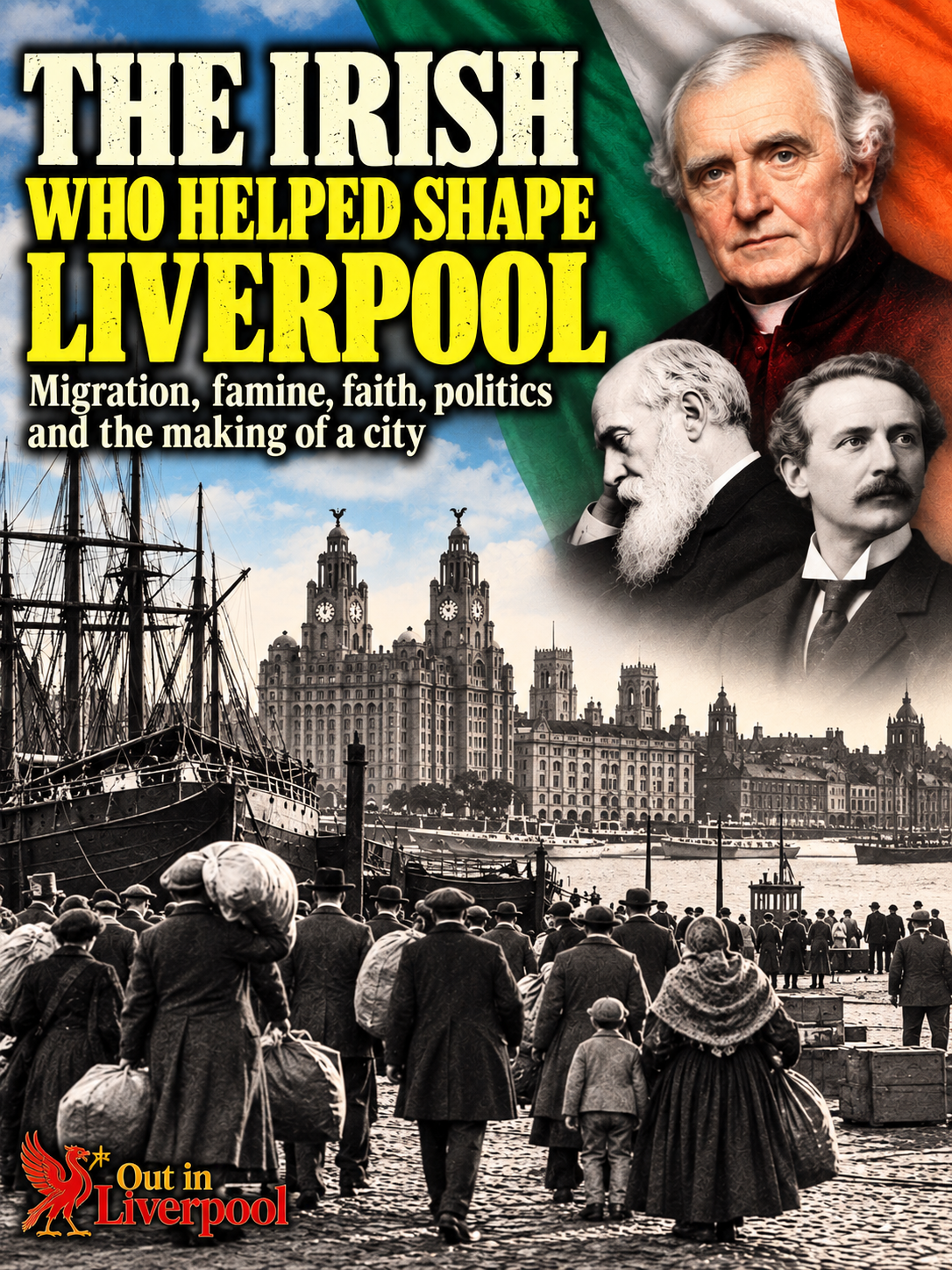 Another community whose migration reshaped Liverpool across generationsThe Irish Who Helped Shape Liverpool — Migration, Famine, Faith and PoliticsArticle No. 10 · People & Communities · 11 min read
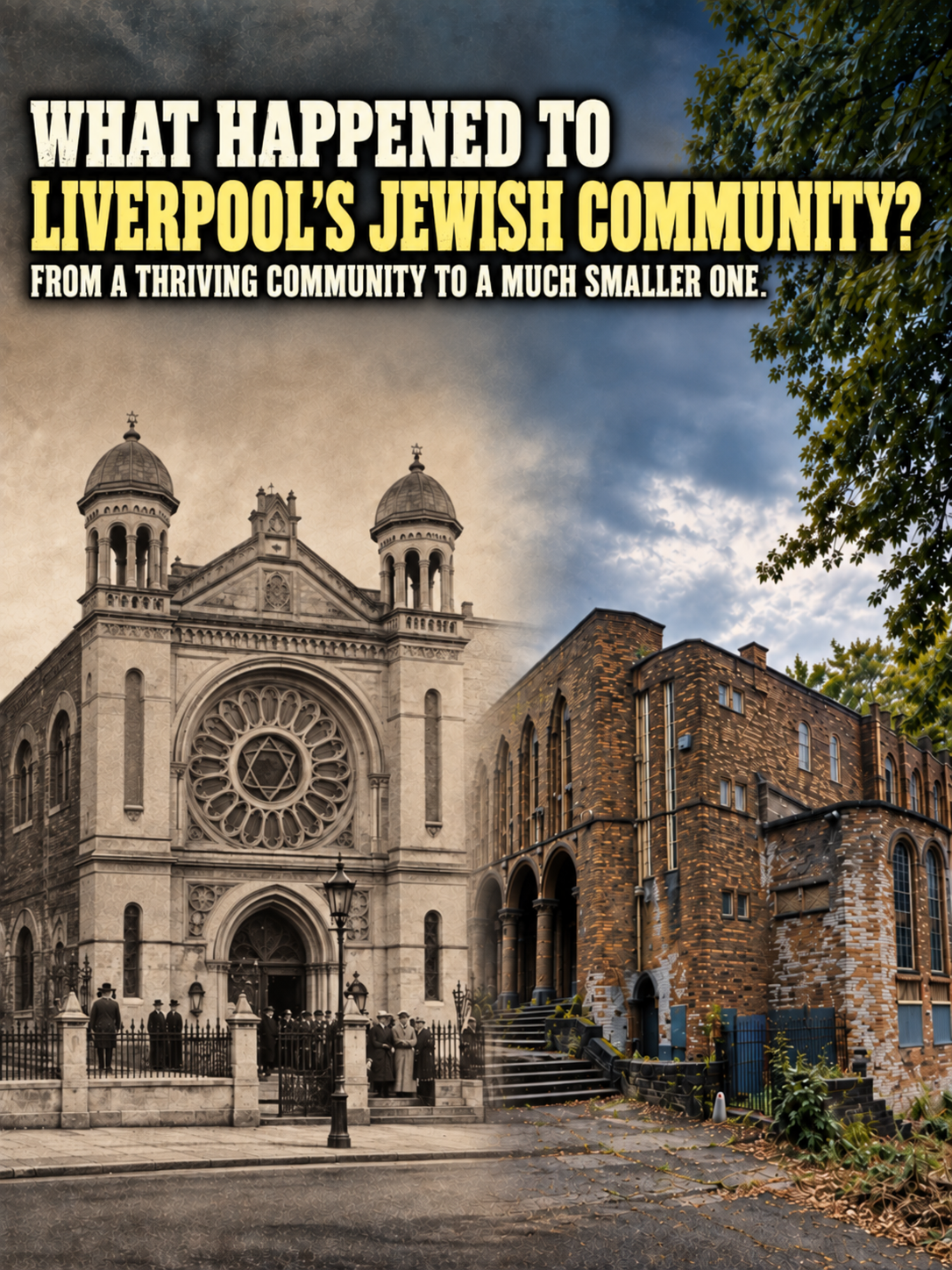 Another Liverpool community story of migration, identity and changing geographyWhat Happened to Liverpool’s Jewish Community?Article No. 12 · People & Communities · 10 min read
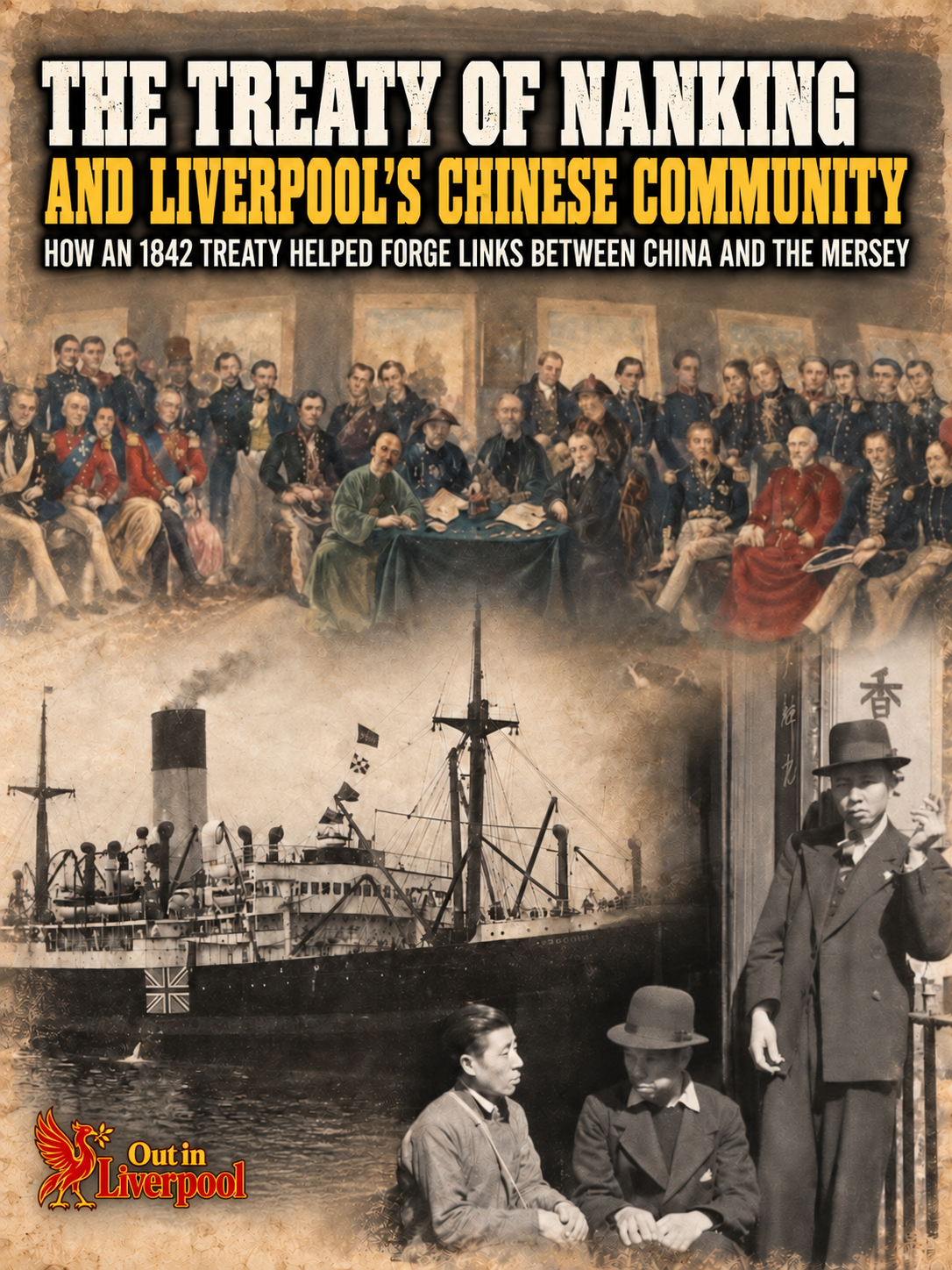 How global connections helped shape Liverpool’s Chinese communityThe Treaty of Nanking and Liverpool’s Chinese CommunityArticle No. 9 · People & Communities · 9 min read
Continue the conversation
Share this Liverpool story
Follow Out in Liverpool or bring your own memories and knowledge to the Community Group.